Research
Research
Working Papers
Family Spillovers of Miscarriage
Lea-Karla Matić
March 2026
Using Austrian administrative data, I estimate the causal effect of miscarriage on women’s labor market and health outcomes, as well as spillover effects on close family members. To do so, I construct counterfactuals for affected individuals from those who experience a miscarriage at a later point in time. The results show that affected women experience short-term labor market detachment, worsening mental health, and increased investment in future fertility. Subsequent fertility shapes these effects, with more persistent adverse outcomes among women without a subsequent birth. For spouses, I find suggestive evidence of mental health effects, but no significant changes in labor supply or fertility-related investments beyond those observed prior to the loss. For sisters, the results indicate increased preventive reproductive healthcare use that is not explained by their own pregnancies.
Working Paper →
Working Paper →
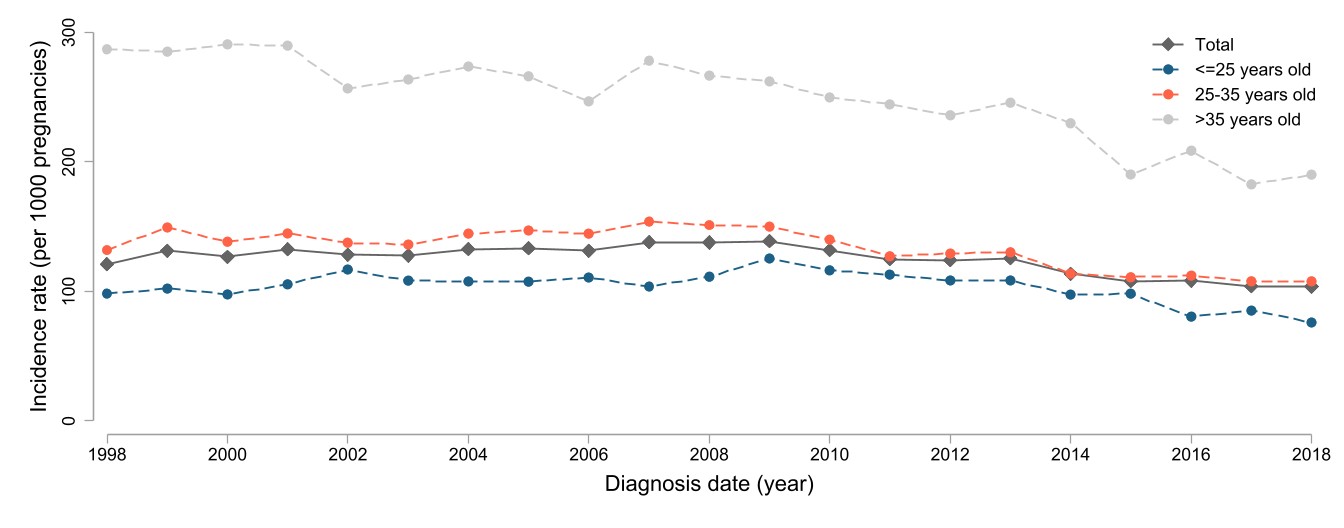
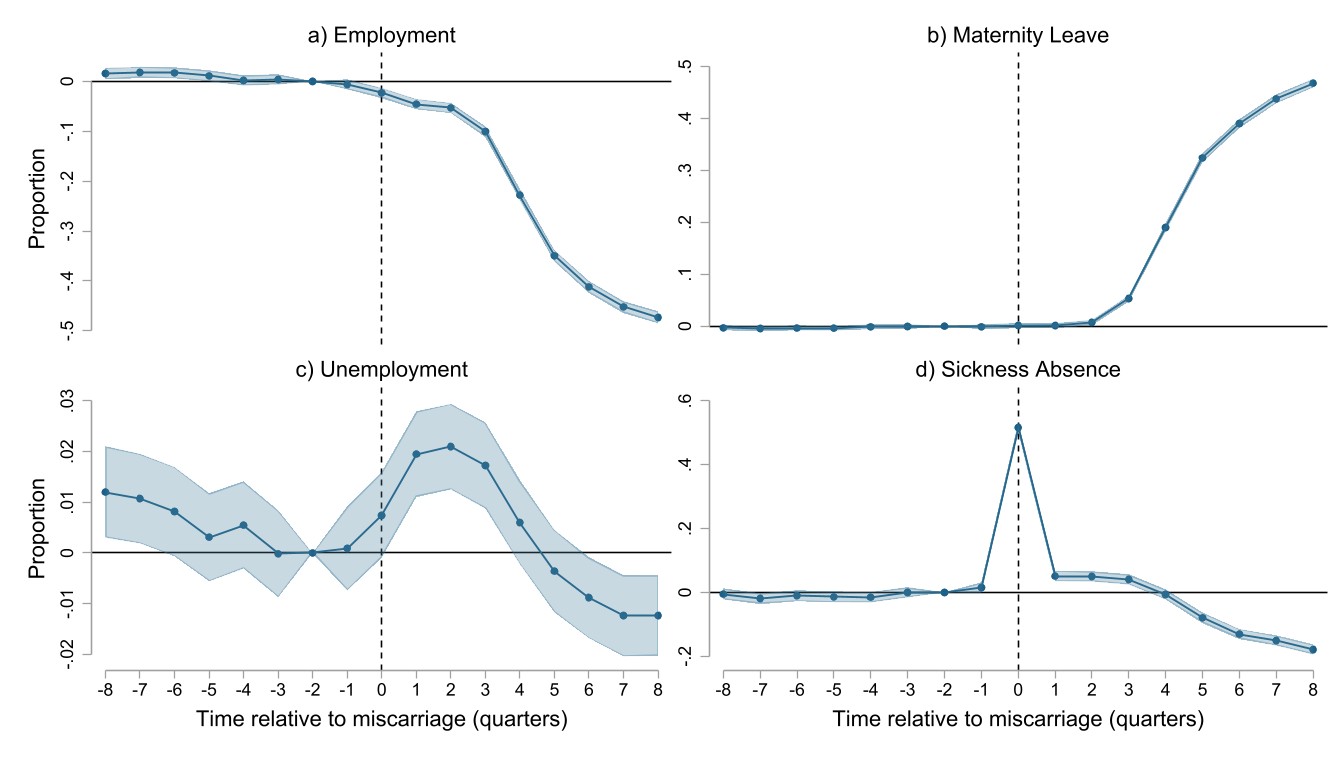
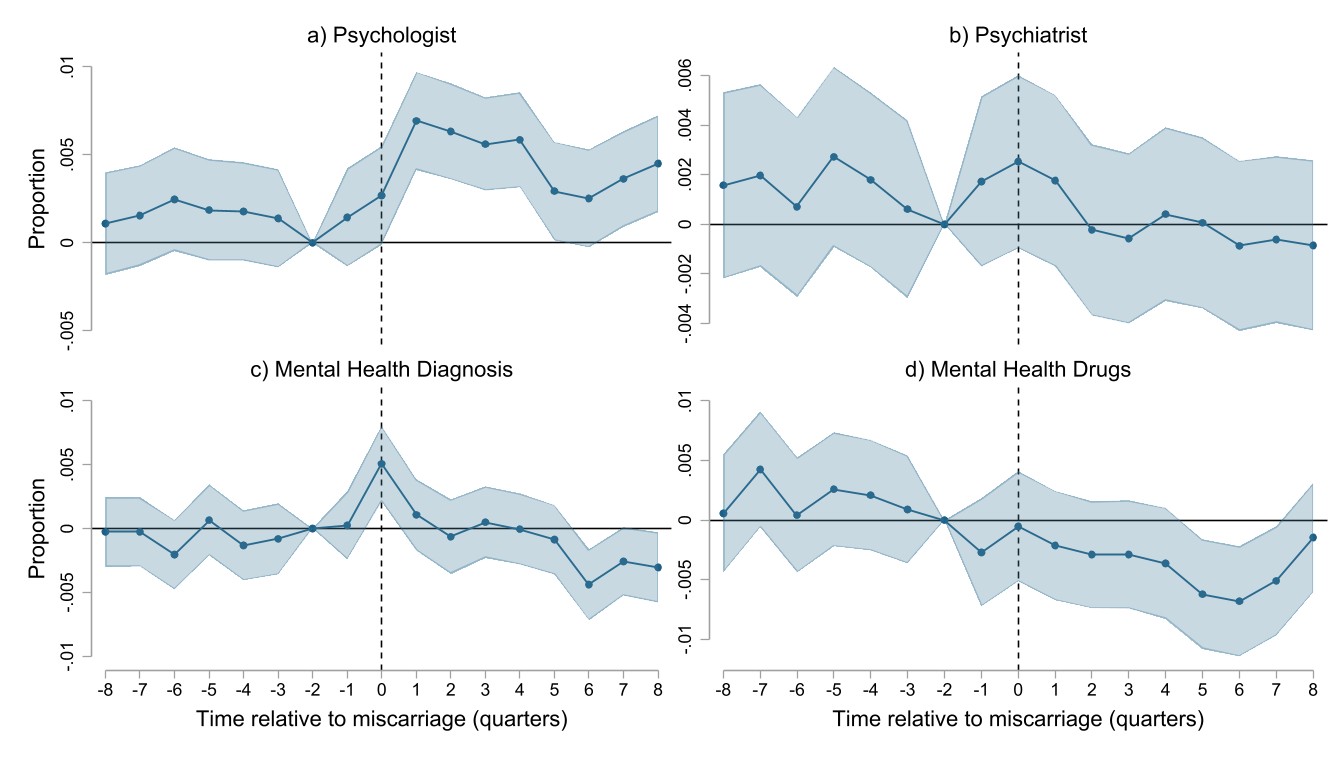

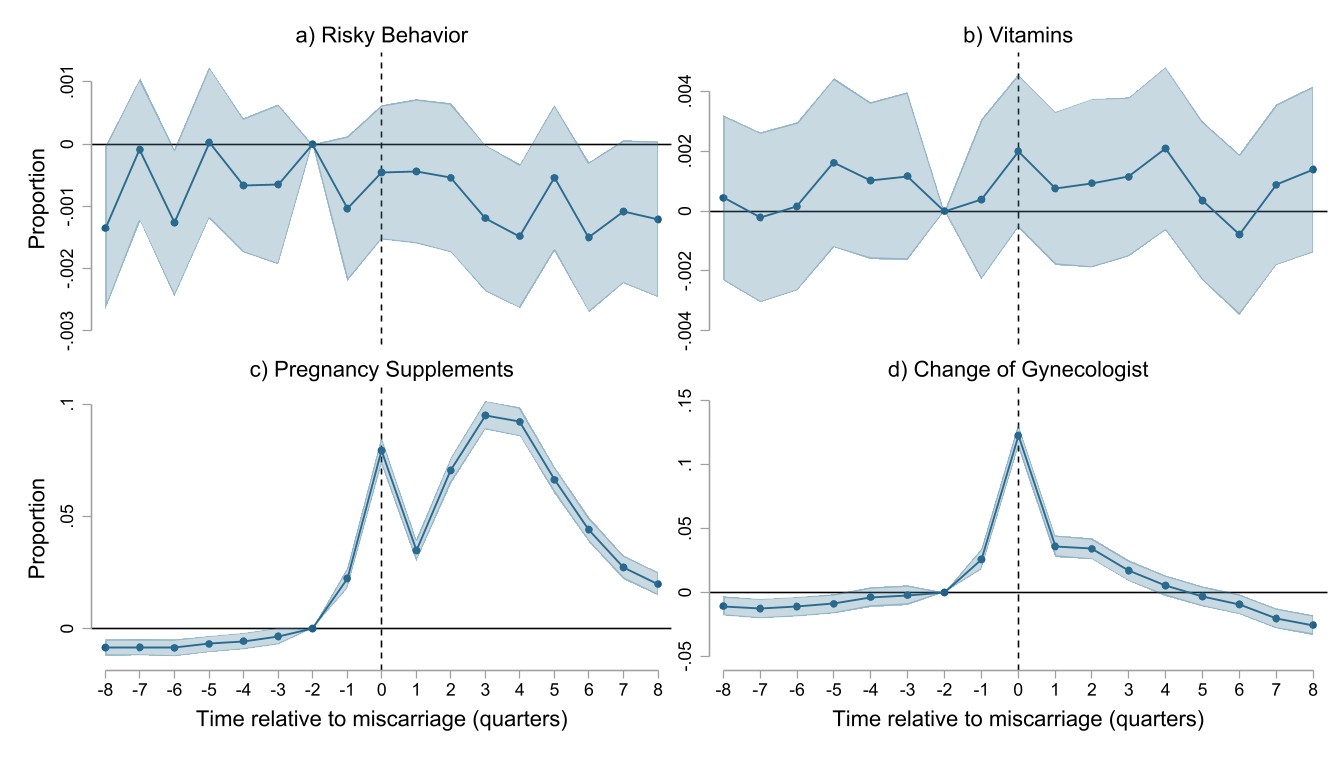
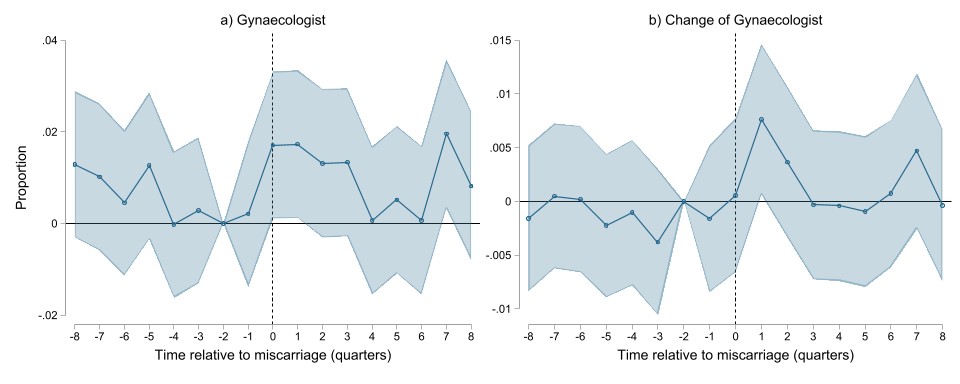
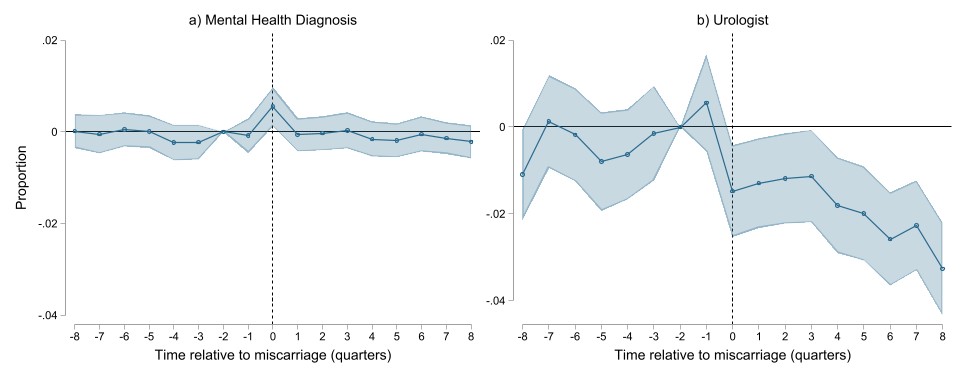
Fig. 1 · Incidence rate of miscarriage
End-of-Life Medical Spending: Patterns and Household Spillovers
Alexander Ahammer, Lea-Karla Matić
March 2025
Medical spending is highly concentrated at the end of life and varies widely across patients, raising a first-order welfare question about whether marginal end-of-life spending reflects waste or generates meaningful benefits. Using Austrian administrative data, we document that end-of-life spending has grown markedly over time and remains highly dispersed even conditional on diagnosis, with predicted mortality explaining only a small share of the variation. We then study a largely underexplored margin: spillovers onto surviving spouses. Event study estimates show large and persistent changes in spouses’ employment and healthcare use around spousal death. However, these dynamics are essentially invariant to the decedent’s end-of-life spending intensity, a finding that is robust to different measures of spending intensity and to an instrumental variables design exploiting provider-level practice variation. Together, these results are consistent with an important role for inefficiencies in end-of-life care.
Working Paper →
Working Paper →
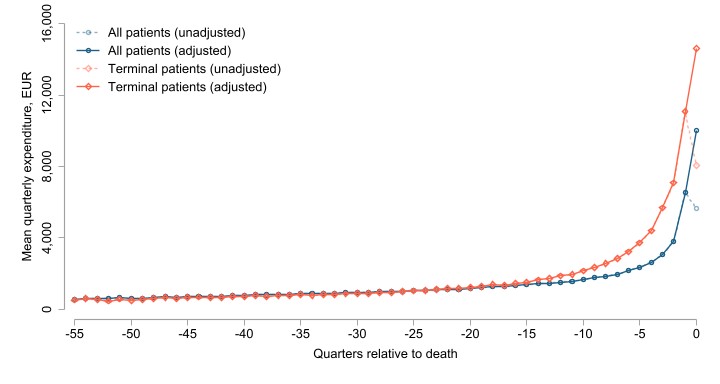
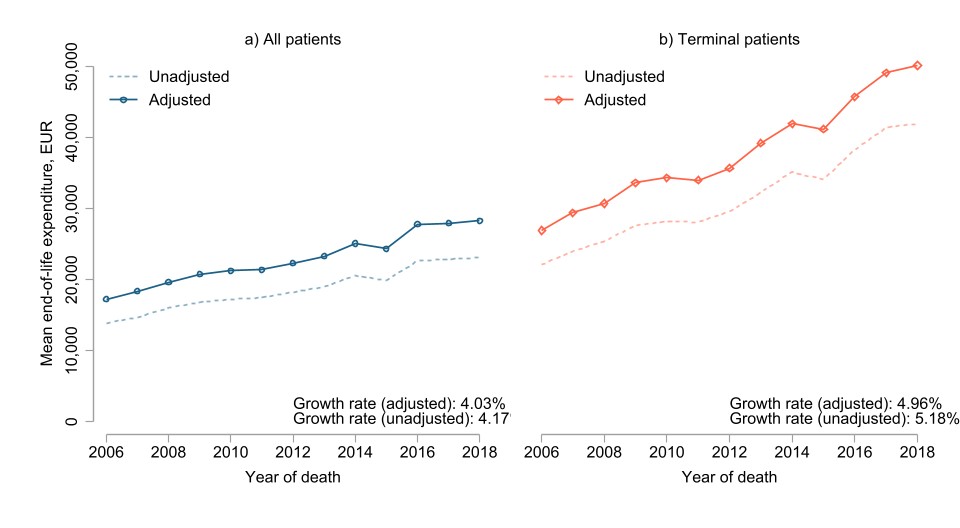

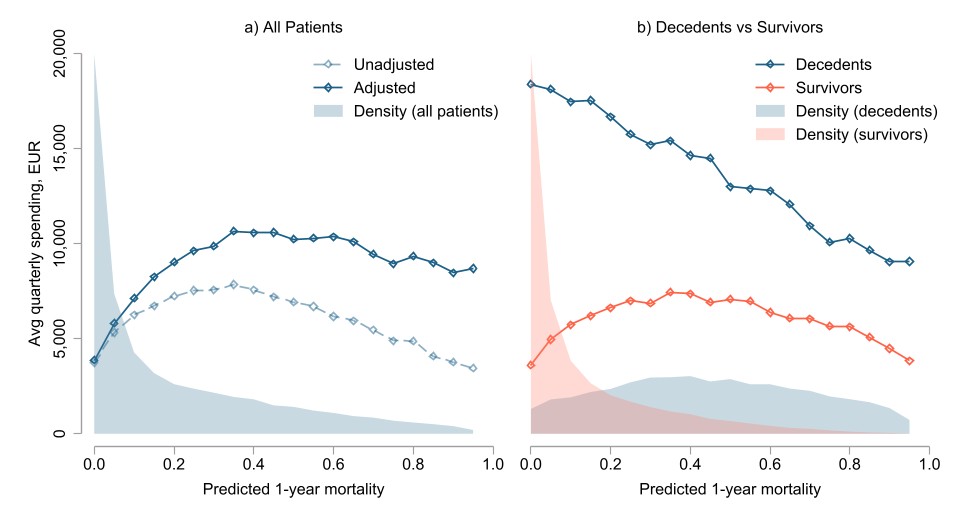
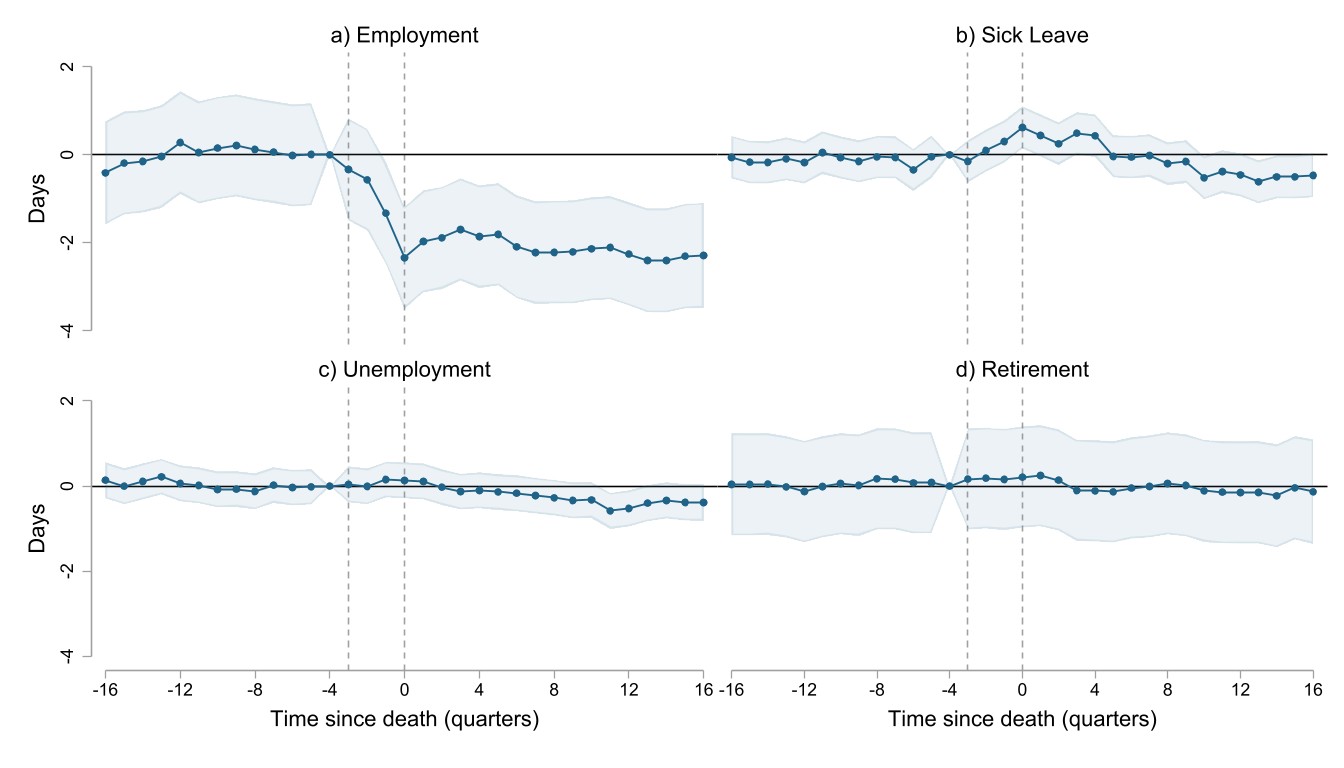
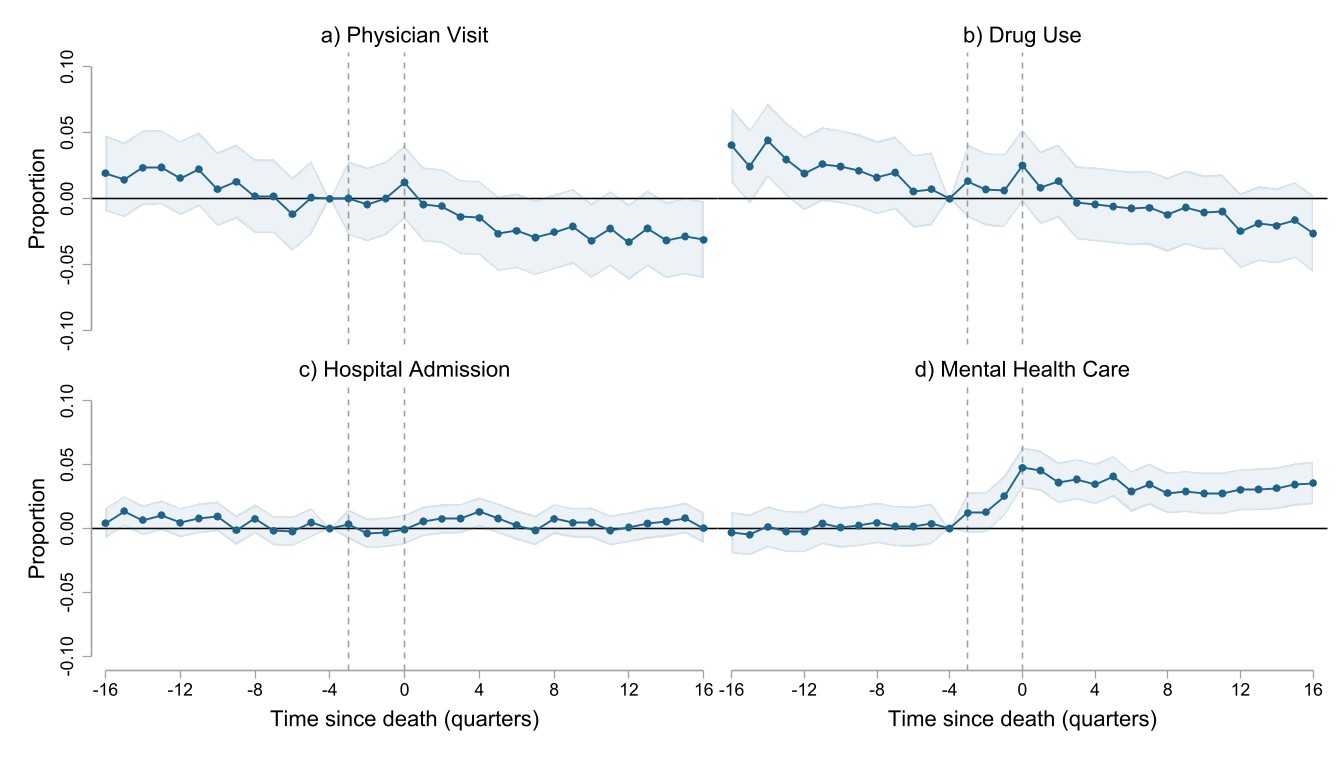


Fig. 1 · Medical spending relative to death
The Right to Parental Part-Time Work: Workplace Flexibility and the Costs of Motherhood
Lea-Karla Matić, Johanna Luise Reuter
March 2026
Part-time work is an important policy margin through which governments seek to reconcile paid employment and family responsibilities, yet its broader effects remain poorly understood. This paper estimates the causal effects of Austria’s 2004 introduction of a legal right to parental part-time work for mothers with stable pre-birth employment in firms with more than 20 employees. Using rich administrative data and a triple-difference-in-differences design, we show that the reform generates large and persistent increases in part-time employment but only modest and short-lived gains in labor market attachment. Post-birth adjustment instead occurs through greater retention with the pre-birth employer and higher subsequent fertility. These effects are accompanied by persistent earnings losses and an increase in the child penalty of roughly 5 percentage points, concentrated in sectors with steep returns to full-time availability. We also find adverse short-run effects on maternal mental health, with no evidence of lasting impacts. Taken together, our results show that even a long, enforceable, and well-targeted part-time entitlement does not resolve the tension between labor market flexibility and mothers’ economic and psychological outcomes.
Working Paper →
Working Paper →

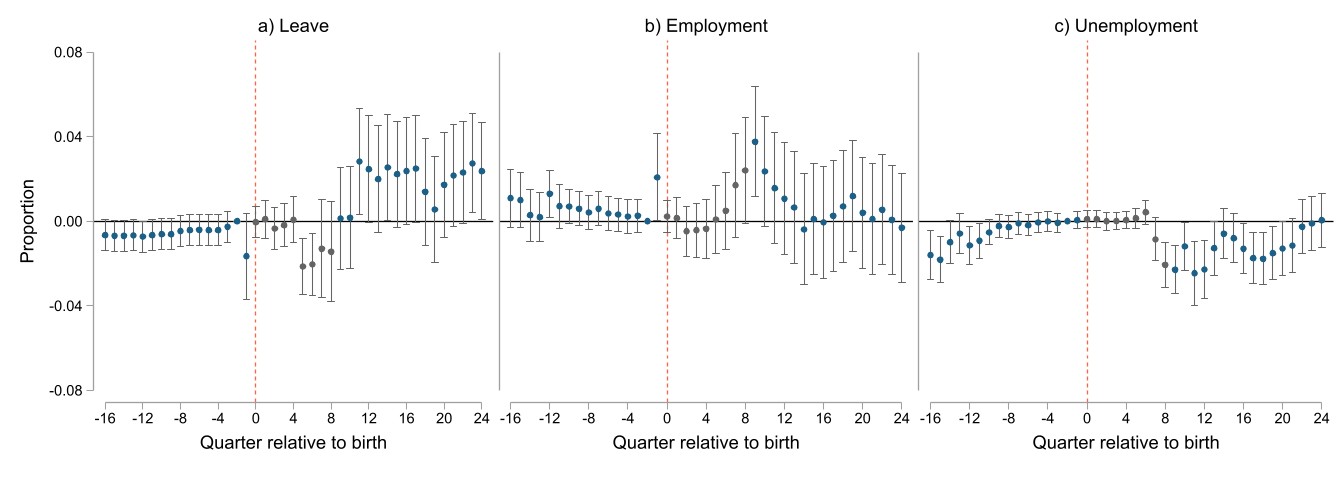

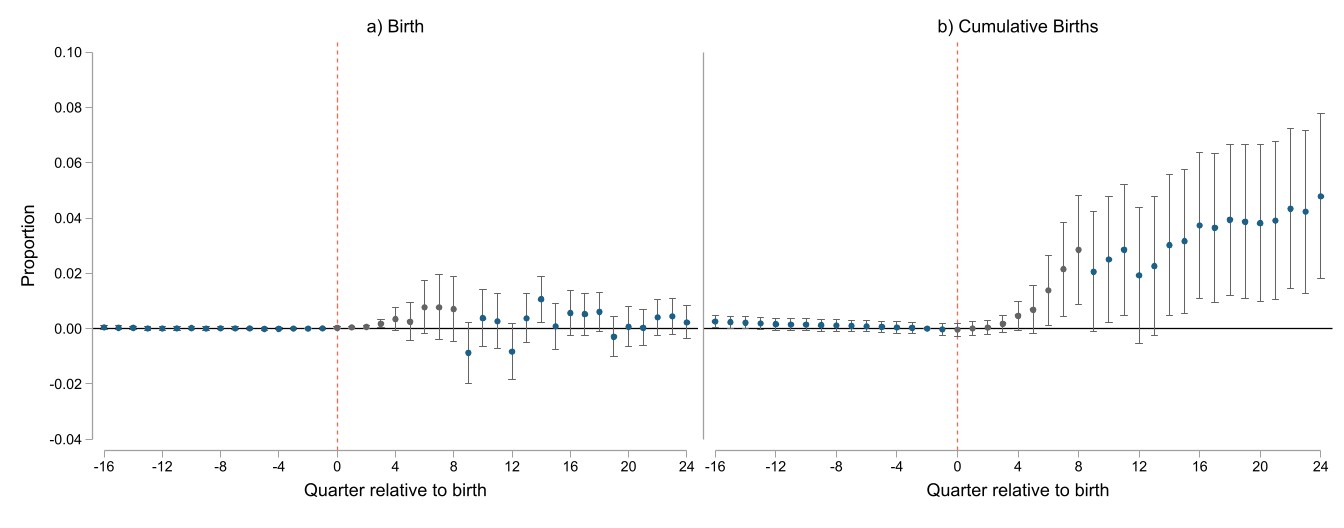

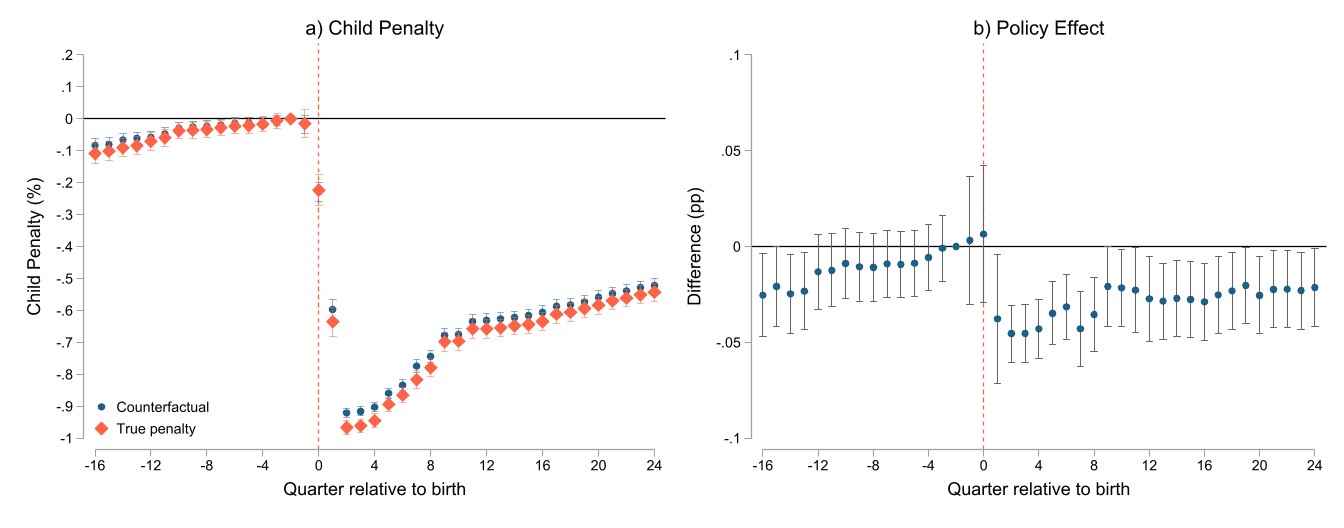
Fig. 1 · Event study estimates: Part-Time Employment
Work in Progress
The Economics of Natural Disasters: Evidence from Riverine Floodings in Austria
Alexander Ahammer, Lea-Karla Matić, Flora Stiftinger, Ivan Žilić
OGTT Reform and Gestational Diabetes: Evidence from Austria
Lea-Karla Matić, Johanna Luise Reuter, Carola Stapper, Katrin Zocher